
How a mid-size brand is testing AI-powered connected TV buying
How a mid-size brand is testing AI-powered connected TV buying
As seen in Ad Age
Energy drink brand Gorgie is using Kargo’s new AI platform, Karlo, to move beyond Instagram and TikTok and test connected TV without the large budgets and operational demands typically associated with the medium. Gorgie’s tests offer an early look at what marketers can automate, what they still control and how AI could lower the barriers to premium media for mid-size brands.
Kargo launched Karlo earlier this month to reach mid-size advertisers and independent agencies beyond the 800 to 1,000 enterprise customers it serves annually. Karlo uses six AI agents to plan campaigns, select audiences and inventory, adapt creative and analyze performance. The company’s pricing model is still evolving, but it is currently targeting marketers that spend roughly $30,000 a month, and wants its self-service platform to eventually expand its customer base into the tens of thousands.
Smaller advertisers often concentrate their spending with Google and Meta because those platforms make it relatively easy to buy ads with minimal effort. Kargo is betting that an AI-powered self-service platform can give those marketers easier access to connected TV.
“What you’re effectively doing is unlocking many, many more places that the buyer would be able to access without significantly greater resources,” Harry Kargman, Kargo’s CEO, told Ad Age.
From sorority houses to streaming
Gorgie founder and CEO Michelle Cordeiro Grant initially built the energy drink, which launched in 2023, around social media and IRL events. Now, the company is looking for ways to reach wider audiences as it expands retail distribution. Gorgie reported a 600% year-over-year increase in retail sales in July, with distribution projected to exceed 15,000 stores nationwide by the end of this year. Its investors include influencer Alix Earle and musician Jon Bon Jovi.
Half of Gorgie’s marketing spending goes toward events, with the other half supporting digital advertising, though the company declined to share specific budget figures. Gorgie now wants to use Karlo to extend creative developed for social media into CTV, and plans to geotarget campaigns around college communities.
Since June, Gorgie has delivered product packages by drone to sorority houses and turned the footage into social content. Grant said the brand saw a correlation between drone activity, social sharing and shoppers visiting nearby Target and Walmart stores.
Karlo gives the brand a way to take those videos into a connected TV environment without making the kind of financial commitment typically associated with traditional TV advertising, Grant said.
“Rather than having to go towards these high-seven, high-eight-figure budgets to even approach TV, we can now go to Karlo and test out audiences and placements that we actually want,” Grant said.
How Karlo builds a campaign
Karlo marks a shift from Kargo’s traditional managed-service business, which sells creative ad formats and premium media placements to large advertisers such as Hershey. The new platform gives marketers a conversational interface for managing campaigns themselves.
Karlo uses six specialized AI agents to handle campaign planning, audience targeting, inventory selection, creative adaptation and performance analysis. Advertisers interact with the system through natural language, while the agents perform tasks behind the scenes.
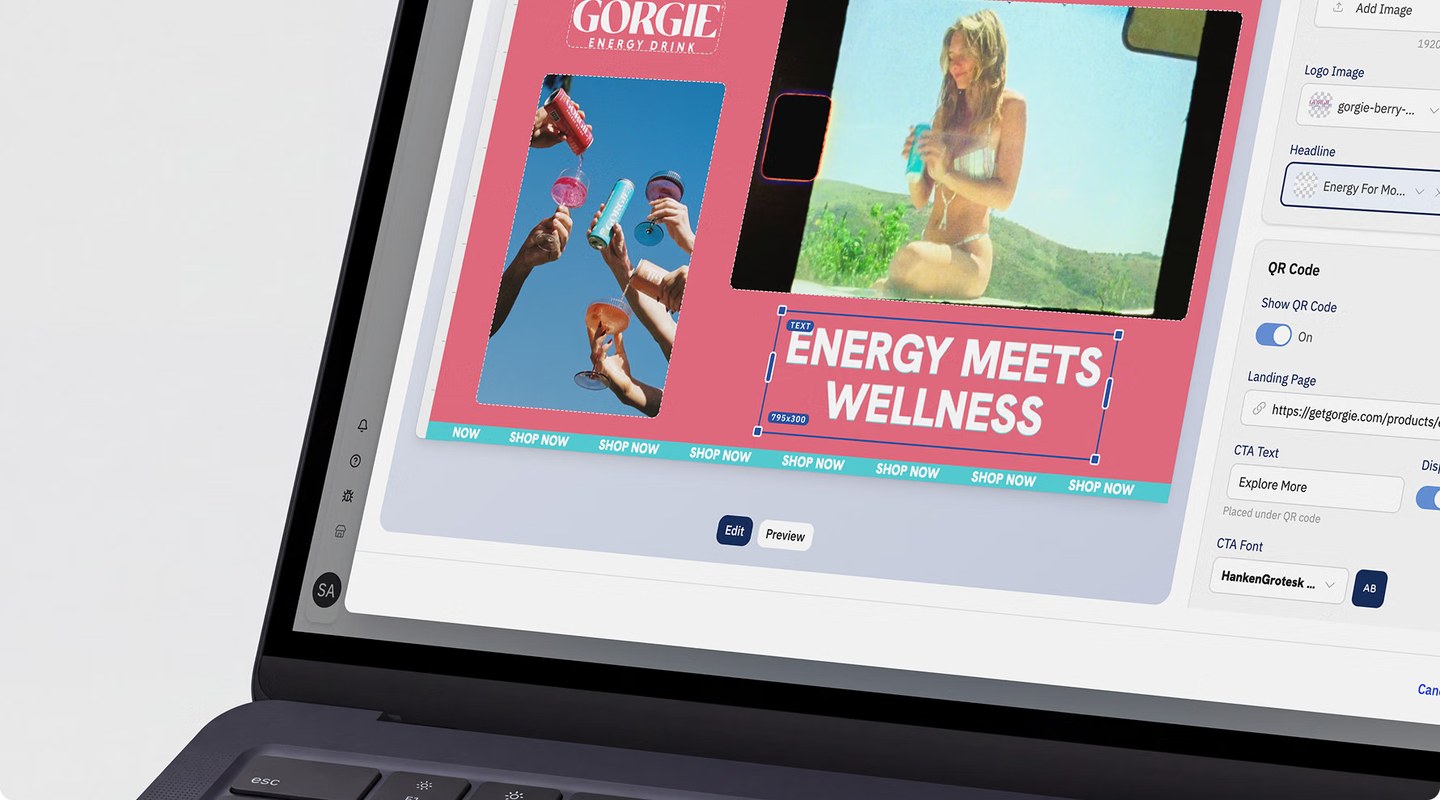
During a demonstration for Ad Age, Karlo used Gorgie’s creative assets to build a fall awareness campaign. The platform recommended allocating 70% of the budget to CTV and 30% to online video, and also generated a custom audience of consumers interested in alcohol-free beverages.
The platform adapted Gorgie’s creative for different placements, allowing Grant to change headlines, images and colors. Previously, even changing a headline color could require updating numerous assets across different formats, making the effort difficult to justify, Grant said.
“That thinking is gone,” Grant said. “I don’t have to think about whether or not I want to do it. I could just do it and try it and see if it works. And then change it back.”
Karlo can also import creative assets from Meta and Canva, allowing brands to reuse existing materials from other channels.
What Karlo still has to prove
Karlo is still new, and Gorgie doesn’t yet have campaign performance results to share. Kargman acknowledged that Kargo has more work to do on attribution and proving advertising outcomes.
Grant sees the immediate payoff in the time her team can reclaim from media operations and devote to events, creative experiments and connecting with consumers.
“I’m a big believer that AI is creating an environment where we can now spend more time together in real life,” Grant said.